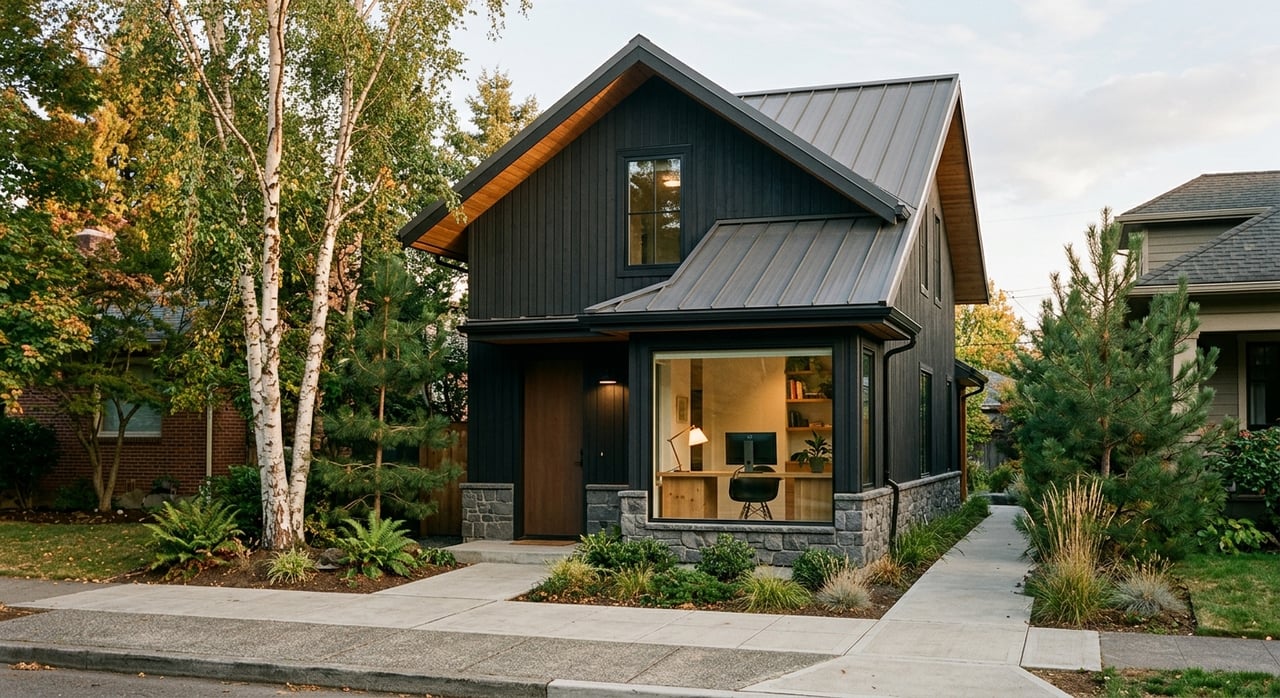
If you are thinking about selling in Midtown Coeur d'Alene, the biggest mistake you can make is treating your home like it belongs to one simple, predictable market. In 83814, pricing, buyer expectations, and competition can change quickly from one pocket to the next. The good news is that with the right strategy, you can position your home more clearly, attract the right buyers, and avoid the costly drag of overpricing. Let’s dive in.
Why Midtown requires a different strategy
Midtown Coeur d'Alene is not a one-size-fits-all neighborhood. The city’s Midtown Overlay was designed to support a lively mix of residential uses, retail, services, and pedestrian-oriented streetscapes, which gives the area a different feel from more purely residential sections of the city.
That mix matters when you sell. Buyers are often responding to more than square footage or finishes. They are also weighing convenience, walkability, access to Fourth Street, and the balance between residential character and nearby business activity.
Midtown boundaries can also feel fluid in everyday conversation. A local report noted that the city does not use formalized neighborhood descriptions, though the Midtown Overlay generally places Midtown from Garden north to Harrison and from Third Street east between Fourth and Fifth.
For you as a seller, that means block-level differences matter. A home near a more active corridor may attract a different buyer than a home on a quieter interior street, even if both are described as Midtown.
Price your home by block, not ZIP code
One of the most important parts of selling strategically is choosing the right comparison set. The 83814 ZIP code had an average home value of $705,227, up 3.8% year over year, with homes going pending in around 62 days. Coeur d'Alene citywide showed a median sale price of $562,500 in March 2026, also with about 62 days on market.
Those numbers are useful for context, but they are not enough to price your Midtown home well. Nearby submarkets show a much wider range. In March 2026, Downtown Coeur d'Alene had a median sale price of $1,036,000, Garden District was $1,118,750, Sanders Beach was $915,000, and Village at Riverstone was $575,000.
This spread shows why broad averages can be misleading. If your home is priced as though it competes with premium lake-adjacent neighborhoods when it does not, buyers may pass it by. If it is priced too low compared with the specific pocket, condition, and product type, you may leave value on the table.
What smart pricing should reflect
Your list price should be grounded in:
- Your exact block or immediate area
- Property condition and updates
- Home style and size
- Lot usability
- Parking and storage
- Nearby competition buyers are actually comparing
In Midtown, strategic pricing is less about chasing a headline number and more about matching how buyers shop this area.
Understand what Midtown buyers are looking for
Midtown has long appealed to buyers who want a central Coeur d'Alene location without paying the premiums found in some lake-adjacent areas. Historical local coverage described demand from first-time buyers, smaller-home buyers, and investors, while more recent lifestyle coverage continues to highlight Midtown’s convenience and walkability.
Today, many buyers are likely drawn to practical lifestyle benefits. A short connection to downtown, access along Fourth Street, nearby parks, and a mix of older, newer, and remodeled homes all shape how buyers view the area.
That means your marketing should not try to make Midtown into something it is not. Instead, it should clearly show why your home is appealing for the way people want to live in this part of Coeur d'Alene.
Features that may matter more in Midtown
Depending on the property, buyers may pay close attention to:
- Functional outdoor space
- Off-street parking
- Storage
- Flexible rooms for work or hobbies
- Updated lighting and paint
- Easy flow and livability
- Proximity to local amenities and downtown access
In a neighborhood where convenience and usability carry real weight, these details can help buyers connect with your home quickly.
Prepare the home for how buyers shop
Strong presentation can have a direct impact on buyer interest. In the National Association of Realtors 2025 staging survey, 83% of buyers’ agents said staging made it easier for buyers to visualize a property as a future residence, and 60% said staging affected most buyers most of the time.
The same survey found that the living room, primary bedroom, and kitchen were the top rooms to prioritize. Photos, physical staging, videos, and virtual tours were also rated as highly important.
For a Midtown home, preparation does not always mean an expensive overhaul. More often, it means creating a clean, intentional, easy-to-understand presentation so buyers can quickly see how the home lives.
High-impact prep steps for Midtown sellers
Focus first on the updates that improve clarity and function:
- Refresh the exterior so the home feels cared for from the curb
- Declutter interiors to make rooms look more open and usable
- Touch up paint where needed
- Replace dated or dim lighting
- Highlight storage, parking, and outdoor areas
- Clarify any flex spaces so buyers understand their use
These steps help your home compete more effectively with other in-town options buyers may be considering.
Consider whether your property has infill appeal
Midtown continues to see redevelopment interest. A February 2026 city design-review packet covered an eight-unit apartment project at 1045 N. 4th Street within the Midtown Overlay, which shows that this remains an active infill area.
That does not mean every Midtown property should be marketed as a redevelopment opportunity. It does mean that for some homes, especially those with larger lots or less typical layouts, the best buyer may not be the same as for a standard owner-occupied home.
The city’s Coeur Housing framework is intended for areas near jobs, services, downtown, public transportation, and walking or biking trails, and it includes house-scale forms like townhouses, triplexes, fourplexes, live/work units, cottage courts, courtyard apartments, and multiplexes.
When this could affect your selling strategy
It may be worth evaluating a broader buyer pool if your property has:
- A larger or unusually shaped lot
- A location near active mixed-use or infill corridors
- Features that support flexible use
- Value that may be tied to land potential as well as the existing home
In these cases, your pricing, marketing language, and buyer targeting may need a more nuanced approach.
Time the sale around your goals
Timing matters, but strategy matters more. Market seasonality data points to spring as a stronger selling season, with activity often peaking in spring and summer and slowing in fall and winter.
For sellers with flexibility, that can make the next spring window especially appealing. If you are planning ahead with a 6 to 12 month horizon, using summer and fall for repairs, staging decisions, and photography can set you up for a more polished spring launch.
If your move timeline is sooner, waiting may not be the best answer. In that case, sharper pricing and cleaner presentation can matter more than trying to hit a perfect seasonal window.
A simple planning framework
If you want to sell strategically, think through these three questions first:
- What is driving your move timeline?
- Which buyers are most likely to want your home?
- Does your home compete best as a lifestyle property, a value play, or an infill opportunity?
Clear answers to those questions can shape the entire listing plan.
Know when local expertise matters most
Some Midtown sales are straightforward. Others need more precise handling from the start.
A local expert adds the most value when your home sits near a neighborhood boundary, when the property may have redevelopment or ADU-style potential, or when early marketing does not produce strong showing activity. In those moments, broad city averages are not enough. Block-level comp selection, buyer targeting, and quick pricing adjustments become much more important.
That is where a strategic, local-first approach can protect your leverage. Instead of guessing where your home fits, you can position it based on how Midtown actually works today.
If you are preparing to sell your Midtown Coeur d'Alene home, the smartest next step is to build a pricing and presentation plan around your block, your property, and your timeline. For a personalized strategy and market valuation, connect with Griffin Realty Group.
FAQs
How should you price a Midtown Coeur d'Alene home in 83814?
- You should price it using block-level comparable sales, property condition, and home type rather than relying only on 83814 averages, because nearby submarkets in Coeur d'Alene show a wide range of price points.
What makes Midtown Coeur d'Alene different from nearby areas?
- Midtown stands out for its mixed residential and business character, pedestrian-oriented design, and convenient access to downtown, which can influence both buyer demand and pricing from one block to the next.
What improvements help most when selling a Midtown Coeur d'Alene home?
- The most helpful updates are often practical ones, such as decluttering, fresh paint, improved lighting, stronger exterior presentation, and clearly showing parking, storage, outdoor space, and flexible living areas.
When is the best time to list a Midtown Coeur d'Alene home?
- Spring is often the strongest season for listing, but if you need to sell sooner, a well-prepared home with sharp pricing can still perform better than a delayed listing with no clear strategy.
Could a Midtown Coeur d'Alene property appeal to infill buyers?
- Some properties may attract infill-minded buyers, especially if they have larger lots, flexible use potential, or locations within active redevelopment areas, but that should be evaluated case by case.
Why should you work with a local expert when selling in Midtown Coeur d'Alene?
- A local expert can help you choose the right comparable sales, identify the most likely buyer pool, and adjust strategy quickly if your home is near a neighborhood boundary or has unique positioning in the market.