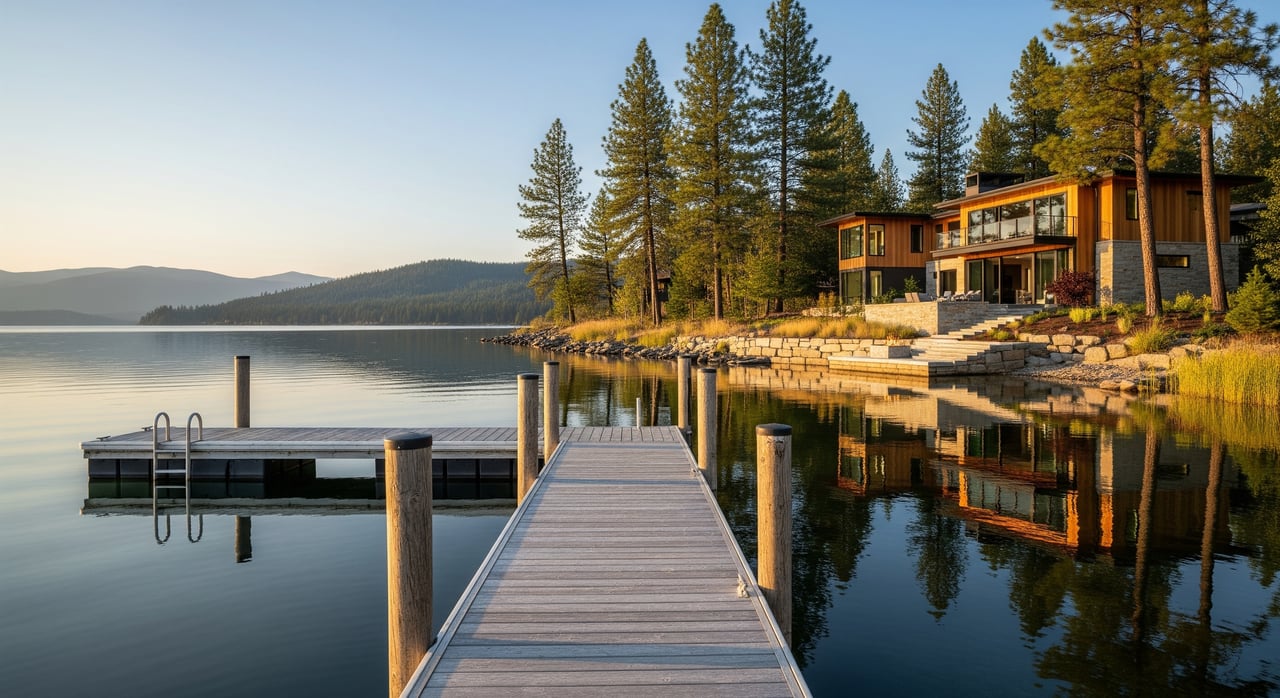
If you have been browsing Lake Coeur d’Alene waterfront and wondering why two homes a mile apart feel so different in price, water conditions, and lifestyle, you are not alone. On this lake, value shifts quickly from cove to cove and along the river. You want a clear, simple way to compare areas so you can focus your search with confidence. In this guide, you will learn how local “micro‑markets” work, what to look for in four well‑known stretches, and what to verify before you buy or sell. Let’s dive in.
What a micro‑market is here
A micro‑market on Lake Coeur d’Alene is a small, distinct shoreline segment that behaves like its own mini market. Think bays, peninsulas, points, and river corridors that share similar boating exposure, access to marinas, typical property types, and price behavior.
Why it matters: waterfront values are sensitive to local factors. Wake and wind exposure, shoreline type, dock rights, road access, septic versus sewer, and local permitting rules can all shift buyer appeal and pricing. One home may sit in a protected cove with calmer water while another faces open‑water traffic. Understanding these nuances helps you price well as a seller and make a confident offer as a buyer.
How to compare micro‑markets
When you compare areas like Cougar Bay, Mill River, Bellerive, and North Cape, organize your notes around these nine themes:
- Location and orientation: exact shoreline boundaries and which side of the lake or river you are on.
- Housing and lots: single‑family vs. condos, private docks, lot slope, and shoreline materials.
- Lifestyle and feel: privacy level, typical resident patterns, and proximity to downtown amenities.
- Boating and wake exposure: distance to main channel, traffic patterns, and wind.
- Marinas and launches: nearest full‑service marina, public launches, and HOA slip options.
- Commute and services: drive times to downtown, grocery, schools, and hospitals; access to I‑90 and the airport.
- Price dynamics: relative pricing, days on market, seasonality, and key value drivers.
- Legal and infrastructure: dock permitting authority, septic vs. sewer, flood mapping.
- Talking points: pros and cons for primary, second‑home, and investment goals.
Quick snapshot: four CDA micro‑markets
Below is a high‑level snapshot to help you sort first impressions. Use it as a starting point, then verify details for any specific property.
| Area | Setting | Boating exposure | Access and services | Verify next |
|---|---|---|---|---|
| Cougar Bay | Protected bay/cove setting | Often calmer water; confirm any posted speed rules | Close to town; check nearest launch and marina | Wake rules, dock status, winter road clearing |
| Mill River | River corridor linking to the lake | Narrower channel; different wake/current dynamics | Quick access to I‑90; verify nearby launches | Exact river location, boating rules, slip options |
| Bellerive | Planned neighborhood context | Neighborhood shoreline use varies by HOA | Walkability and community amenities depend on subdivision | HOA rules, dock and rental regulations, fees |
| North Cape | Point/peninsula exposure | Broad views; potential wind/wake exposure | Distance to town varies; confirm winter access | Topography, shoreline protection, travel times |
Cougar Bay profile
Cougar Bay is commonly viewed as a more protected cove, which can appeal to buyers who value calmer water and privacy. The character of the bay may reduce through‑traffic compared with the open lake, but you should verify posted local wake and speed rules before relying on that.
For daily life, check road access, typical winter maintenance, and drive time to downtown Coeur d’Alene services. Identify the nearest public launch and full‑service marina, and note whether trailer parking is straightforward in peak season. On pricing, protected water can support a premium when the waterfront is truly usable and dock rights are clear. Confirm recent comparable sales within Cougar Bay rather than relying on lakewide averages.
Mill River profile
Riverfront stretches often behave differently from open lake frontage. Channels can be narrower, and current and wake patterns differ from the center of the lake. That can attract anglers and paddlers, while some power boaters may prefer open water. Because “Mill River” can refer to multiple nearby locations in common use, verify the exact segment you mean, along with local boating rules.
Check nearest public launches, the presence of private boathouses or docks, and any community slip options. Pricing can diverge between riverfront and open‑lake properties depending on views, boat access, and buyer preferences. Compare like‑to‑like comps within the same river stretch for the clearest picture.
Bellerive profile
Bellerive is often discussed as a defined neighborhood or planned development, but you should confirm the exact subdivision boundaries and HOA structure. Planned communities may include shared amenities such as parks or trail access. HOA rules can also shape dock, lift, and rental permissions, which are important for both lifestyle and valuation.
If you are considering Bellerive, request the current CC&Rs and HOA fee schedule, verify how slips are allocated or transferred, and check recent sales, days on market, and any neighborhood‑specific premium tied to amenities or walkability.
North Cape profile
Points and capes typically offer sweeping, 180‑degree views along with more exposure to wind and wakes. That can be a draw for view‑driven buyers and boaters who like fast access to open water, but it may call for more robust shoreline and dock protection.
Verify the topography, the condition and permitting of any shoreline improvements, and how weekend traffic affects comfort and dock wear. If the area sits farther from downtown, confirm travel times in all seasons and check winter maintenance. Compare comps within North Cape rather than mixing with protected coves.
Boating rules, wake zones, and marinas
Before you commit to a waterfront property, confirm who sets the rules and where they are posted.
- State rules: Review statewide boating laws through the Idaho Department of Parks and Recreation to understand safety and general operating requirements. See the Idaho Parks and Recreation overview under boating activities and laws at the Idaho Department of Parks and Recreation website.
- Local rules: The City of Coeur d’Alene and Kootenai County can designate and enforce no‑wake and slow‑speed zones, along with harbor rules. For county waterways and mapping resources, start with Kootenai County’s Waterways page.
- Marinas and launches: Many buyers want quick access to a full‑service marina for fuel, transient moorage, and services. The Coeur d’Alene Resort Marina downtown is a helpful anchor point to gauge distance and convenience.
Helpful links:
- Idaho boating laws and resources at the Idaho Department of Parks and Recreation.
- Kootenai County Waterways for local navigation and safety information.
- Coeur d’Alene Resort Marina for downtown slip and service details.
Pricing metrics that matter
If you want a clear value picture, track micro‑market metrics rather than lumping all waterfront together. For the last 12 months and year over year, focus on:
- Median sale price for waterfront and for lake‑view (non‑frontage) homes.
- Number of waterfront sales, active inventory, and months of supply.
- Average days on market for waterfront listings.
- Price per linear foot of usable waterfront when available.
- Cash versus financed share of sales.
- New construction versus resale mix.
- Seasonal listing patterns and peak months.
Primary data sources include the local MLS and Coeur d’Alene Association of REALTORS® for market reports and monthly or quarterly snapshots. For official sale prices and deed history, consult the Kootenai County Assessor and Recorder. Always compare like‑kind properties within the same shoreline stretch, and weigh dock rights and usability at least as much as raw linear frontage.
Buyer checklist: what to verify
Use this list to tighten your due diligence before you write an offer.
- Waterfront status: Confirm true riparian rights versus water view only.
- Dock rights and slips: Private dock, appurtenant slip, or HOA/community allocation. Check if slips transfer with the property.
- Permits and history: Verify permits for docks, lifts, and shoreline work. Resolve any code issues before closing.
- Shoreline composition: Bedrock, sand, or riprap and how it impacts access and maintenance.
- Flood mapping: Check FEMA’s National Flood Hazard Layer for insurance implications.
- Utilities: Septic approval and inspection history if not on municipal sewer; well versus municipal water.
- Access in winter: Road grade, maintenance responsibility, and snow patterns.
- Marina and launch access: Where you will launch and park a trailer in peak season.
- Wake maps and traffic: Local no‑wake zones, weekend peaks, and special events.
Seller checklist: how to prepare
These steps help you position your property and remove friction for buyers.
- Comparable sales: Pull recent, truly comparable comps within your micro‑market.
- Dock and shoreline documentation: Permits, improvements, and service records.
- Seasonal notes: Typical high‑water timing and any shoreline protection updates.
- Access and convenience: Provide clear travel times to downtown and Spokane International Airport for out‑of‑area buyers.
- HOA details: If applicable, document slip transfer rules, fees, and community amenities.
When you are ready for a micro‑market pricing conversation or want an updated set of waterfront comps, reach out. A targeted comp set is more accurate than a broad lakewide average.
Ready to compare neighborhoods, verify rules, or see a shortlist of recent waterfront comps in Cougar Bay, Mill River, Bellerive, or North Cape? Connect with the local team that lives this market every day. Contact Griffin Realty Group for a personalized plan.
FAQs
How noisy is boat traffic near a specific CDA property?
- Traffic varies by distance to the main channel, posted wake rules, and event timing. Check local no‑wake and slow‑speed zones through Kootenai County Waterways and confirm weekend peaks by visiting at different times.
Who permits new docks or lifts on Lake Coeur d’Alene?
- Dock permitting is typically handled by the City or County, depending on location, along with applicable state rules. Start with the City of Coeur d’Alene Building Services and Kootenai County Community Development, then align with Idaho Parks and Recreation boating regulations.
Do I need flood insurance on a CDA waterfront home?
- It depends on FEMA mapping and lender requirements. Search your parcel in FEMA’s National Flood Hazard Layer to see if it intersects a mapped flood zone and discuss with your insurance professional.
Where can guests launch a boat near downtown Coeur d’Alene?
- Use public launches listed by the City and County, and confirm parking rules in peak season. The downtown Coeur d’Alene Resort Marina is a helpful reference point for services and transient moorage.
Do waterfront homes hold value differently than non‑waterfront locally?
- Waterfront inventory can be thin, and values hinge on usable frontage, dock rights, and exposure. Track micro‑market metrics via the Coeur d’Alene Association of REALTORS® and compare like‑for‑like within the same shoreline stretch.