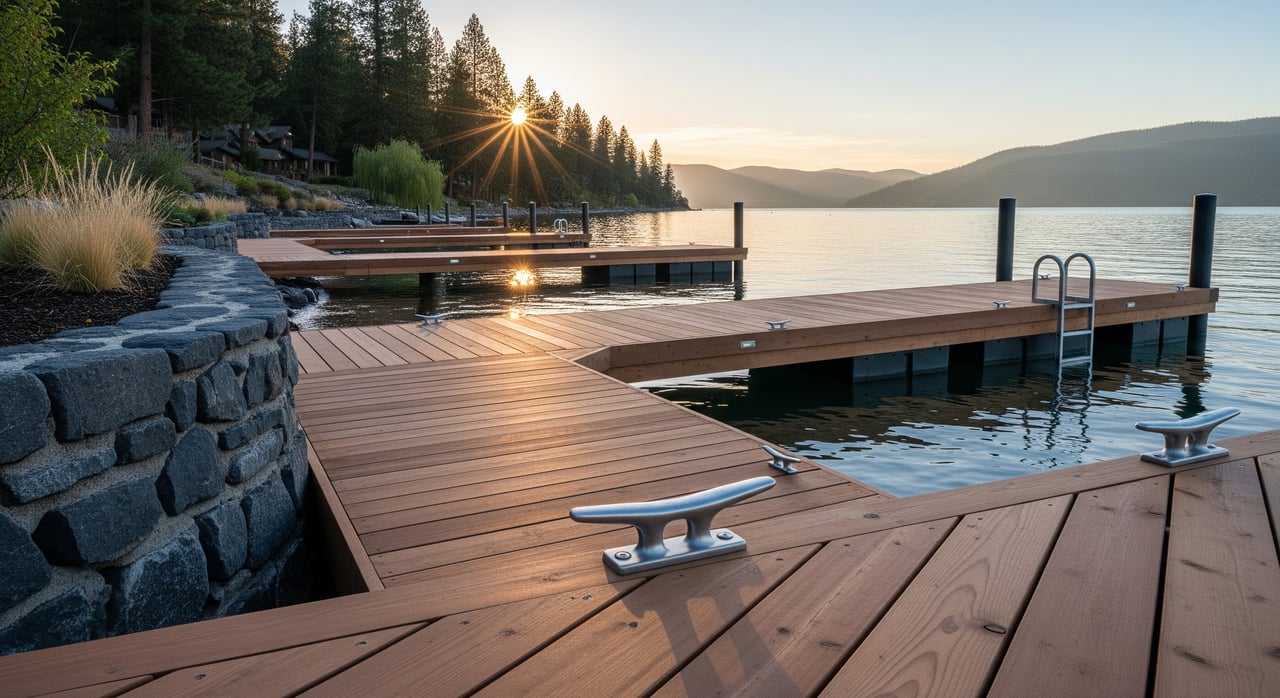
Thinking about adding a dock or refreshing your shoreline on Lake Coeur d’Alene? If your home or lot sits in 83814, you have several agencies to contact and a few important steps to line up before you design or build. The right plan saves time, avoids fines, and protects your investment.
This guide walks you through who handles what, the permits you may need, and a clear step-by-step path from concept to construction. You will also learn common pitfalls and what buyers and sellers should verify during a waterfront sale. Let’s dive in.
Start with your jurisdiction
Your first move is to confirm whether your parcel is inside city limits or in unincorporated Kootenai County. ZIP 83814 spans multiple jurisdictions, which means different codes, forms, and timelines.
- If your address is inside the City of Coeur d’Alene, you will work with the city’s building and planning departments.
- If you are outside city limits, start with Kootenai County Planning and Zoning.
- Some nearby municipalities like Post Falls or Hayden also manage shoreline projects within their boundaries.
Getting this right up front keeps you from filing the wrong forms or missing required inspections.
Who handles what on Lake Coeur d’Alene
Shoreline and dock work typically involves local, state, and federal authorities. Expect to coordinate with more than one office.
- Local city or Kootenai County: building permits, zoning, shoreline and floodplain requirements, and inspections.
- Idaho Department of Lands (IDL): leases and authorizations for structures on state-owned submerged lands such as lakebed areas where docks are anchored or placed.
- U.S. Army Corps of Engineers (USACE): federal permits for structures or work in navigable waters, and for any dredge or fill activity.
- Idaho Department of Environmental Quality (IDEQ): water quality review and certifications tied to federal permits.
- Idaho Department of Fish and Game (IDFG): consults on fish habitat and may recommend seasonal work windows or mitigation.
- Homeowner associations and easement holders: private approvals can apply in addition to public permits.
What permits you may need
Exact requirements depend on your location and project scope, but these are the common approvals.
- Local building permit: usually required for new docks, fixed piers, boathouses, and larger floating systems. Seasonal floats may have lighter rules, depending on the code.
- State aquatic lease or authorization from IDL: often required if your dock occupies or anchors to state-owned lakebed. Expect lease terms and annual fees.
- Federal authorization from USACE: Section 10 applies to work in navigable waters, and Section 404 applies to dredge or fill. Small projects may qualify for a Nationwide Permit, but notice and review are still required.
- 401 Water Quality Certification: issued by IDEQ when a federal permit needs state water-quality signoff.
- Floodplain or shoreline review: if your property is in a mapped area, you may need added engineering or elevation standards.
- Vegetation or shoreline alteration approvals: removing native vegetation or adding hard armoring can trigger permits and mitigation.
Step-by-step plan for homeowners
Follow this sequence to streamline approvals and avoid conflicts between agencies.
-
Confirm your jurisdiction. Verify city limits versus unincorporated Kootenai County. This determines your primary local point of contact and code standards.
-
Review title and survey. Order a recent boundary survey that shows the ordinary or high-water mark and note any recorded easements. Confirm riparian rights in your deed. Dock rights are not automatic.
-
Talk with local planning and building staff. Ask about setbacks, size limits, and whether your shoreline is in a floodplain or special overlay.
-
Contact Idaho Department of Lands early. Clarify whether you need an aquatic lease, what the application requires, and likely timelines.
-
Check federal needs with USACE. If your project includes pile driving, dredging, or work in a navigation channel, ask if a Nationwide Permit applies or if you need an individual permit.
-
Coordinate with IDEQ and IDFG when relevant. Projects that affect water quality, wetlands, or fish habitat may require timing restrictions or mitigation.
-
Secure HOA and neighbor approvals. Shared coves and narrow shorelines often benefit from written agreements to prevent future disputes.
-
Hire experienced professionals. Consider a marine contractor familiar with local rules, a licensed surveyor to mark the water line, and an engineer or environmental consultant if you plan shoreline stabilization or dredging.
-
Submit applications together when possible. Coordinated submittals help agencies align conditions and reduce back-and-forth.
-
Plan for seasonal windows and inspections. In-water work is often restricted to protect fish spawning and habitat. Confirm your schedule before you sign a construction contract.
Choosing the right dock design
Lake Coeur d’Alene levels vary with the season. Your design should handle fluctuations and protect the lake environment.
- Floating docks: generally less intrusive to the lakebed and a common choice for variable water levels.
- Pile-supported fixed piers: stable underfoot but often require more review and careful engineering.
- Modular systems and boatlifts: check local size limits and placement rules before you commit to a system.
- Boathouses and covered structures: many jurisdictions restrict or prohibit them, or require special approvals.
When in doubt, ask your permitting contacts which options tend to move smoothly through review at your site.
Shoreline stabilization and vegetation
Protecting native shoreline vegetation is a priority around Lake Coeur d’Alene. Removing plants or installing hard armor without approvals can trigger enforcement.
- Hard armoring like concrete bulkheads or large riprap usually faces stronger review and possible mitigation.
- Biofriendly methods and native plant restoration are often encouraged.
- Dredging for channels is heavily regulated. Expect added scrutiny, longer timelines, and mitigation requirements.
Typical timelines and fees
Timelines vary by project size and jurisdiction, but here is what to expect in general.
- Local permits: from a few weeks to a few months depending on scope and staffing.
- IDL aquatic leases: often several months due to surveys, documentation, and public notice steps.
- USACE permits: can add weeks to many months if an individual permit or broader environmental review is needed.
Fees are set by each agency. Local building fees usually scale with project value. IDL leases carry application costs and ongoing rent for state-owned aquatic land use. Federal permits can include administrative fees for certain permit types. Always confirm current schedules directly with each office.
Common pitfalls to avoid
A few missteps cause most delays and enforcement actions. Steer clear of these.
- Starting work before you have all permits in hand.
- Assuming your deed guarantees dock rights without checking riparian rights and state ownership of the lakebed.
- Filing only a local permit without the required IDL lease or federal authorization.
- Ignoring HOA rules or neighbor agreements in shared coves.
- Removing native vegetation or adding unpermitted bulkheads.
What to bring when you call
Having the right documents ready speeds up your first conversation with agencies.
- Legal description and tax parcel ID
- Recent boundary survey with the ordinary or high-water mark
- A simple site plan showing dock location, length, width, and distances to lot lines
- Photos of your shoreline and adjacent areas
- HOA covenants and recorded easements, if any
- Construction methods and materials, plus your contractor’s name if known
- Target timeline and preferred construction window
Buying or selling a waterfront home
If you are buying in 83814, ask for copies of past permits, the current IDL lease or authorization, and any approvals for alterations. A survey that shows the water line and dock location helps you verify compliance and riparian access.
If you are selling, gather permits, signoffs, and lease documents before you list. Buyers will ask for them. If a dock or bulkhead was built without approvals, you may face delays, repairs, or removal requirements during escrow.
Next steps
If you are early in planning, start with jurisdiction confirmation, then a current survey, and quick calls to your local permit office and IDL. If your concept involves pile driving, dredging, or a boathouse, add USACE and IDEQ to your early outreach. A coordinated plan keeps your project on track and protects the lake that makes your property special.
Ready to map out your dock or prep your shoreline for market? Reach out to the local waterfront team that lives this every day. Connect with Griffin Realty Group for clear next steps and a vetted roster of surveyors, marine contractors, and consultants.
FAQs
Do I automatically have the right to build a dock on Lake Coeur d’Alene?
- No. Dock rights depend on your deed, riparian access, local rules, and whether your design uses state-owned submerged land that requires an Idaho Department of Lands lease.
Who do I call first about a dock in ZIP 83814?
- Confirm if you are inside the City of Coeur d’Alene or in unincorporated Kootenai County, then contact the correct local permitting office, followed by Idaho Department of Lands for any aquatic lease questions.
How big can my dock be on Lake Coeur d’Alene?
- Size limits are set by local shoreline and zoning rules and by any IDL lease terms; smaller private docks often have modest footprints, while larger or shared docks face stricter limits.
Do I need a new survey before I apply for permits?
- Yes. A recent boundary survey that shows the ordinary or high-water mark is commonly required by local offices and by Idaho Department of Lands.
Can I dredge to create a deeper access channel?
- Dredging is heavily regulated and typically requires federal authorization, state review, and mitigation; expect longer timelines and close scrutiny.
Are boathouses or covered docks allowed in 83814?
- Many jurisdictions restrict or prohibit covered structures over the water; approvals, if allowed, often require higher levels of review and may be denied.
What happens if I build without permits?
- You risk fines, removal orders, and restoration requirements, and you may need to bring the structure into compliance before a sale can close.